
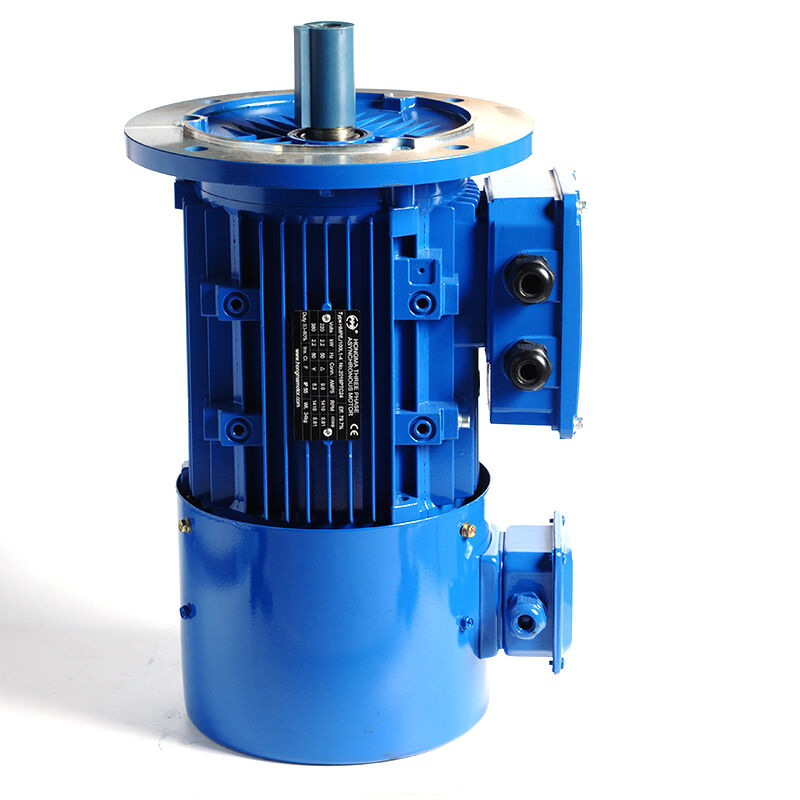
It is essential for everyone who uses an asynchronous electric motor to know the overload capacity of such transformer well. Asynchronous motors, used in factories and other industries, can falter if they become overloaded. An overload occurs when the motor must exert more effort than necessary. This might lead to the motor heating up, burning out more quickly or even failing. Understanding how to rate this overload capacity helps you assure the motor performs well and has a long life. At HONGMA, we want our customers to know how to best take care of their motors. People can make a more appropriate selection when they use such type of the motors based on overload capacity in their work.
Determining the Overload Capacity of Asynchronous Electric Motors
To determine the overload capacity of an asynchronous electric motor, refer to the motor plate. Every motor has a nameplate, which is little more than an adhesive label that displays some important details about the fan: nominal power rating, voltage, current. The power rating matters in particular because it conveys how much load the motor can manage. For instance, if a motor is rated for 5 horsepower, it might well accept a bit more than that from time to time. But push it too far and the motor can get too hot. Here the overload capacity comes into play. You can also verify the service factor – a number that measures how much extra load the motor can handle. If it’s 1.15, wait for the commanded speed to reach 39 so the motor can take 15% more load (and not have an issue). But it’s good to remember that running an engine near its limit continuously for a long time probably isn’t the best plan. It may lead to failure. Also, think about what the motor will be used for. Motors constantly running under heavy loads may require a higher overload capability than on motors that are serving for intermittent duty. Verifying the environment of the motor operating is also necessary. If it’s extremely hot or dusty, the motor could have difficulty coping with overloads. So if you are trying to determine the overload capacity of your asynchronous motor, always bear these elements in mind.
Calculating Overload Capacity to Achieve Maximum Efficiency
It takes a few steps to measure the overload capacity for maximum efficiency, but it’s not too complex. Begin with finding the rated power of the motor. This is the highest power level that the motor can take without overheating. Second you need to know the kind of load that your motor will be driving. For example, if it’s a fan, the amount of power required may be different than for a pump or conveyor. Once you have the rated power and know the type of load, you can check with a motor’s efficiency rating. This rating indicates how effectively the motor converts electrical power into mechanical power. If the motor is very efficient, it’s using less energy to perform the same work. Overload capacity is equal to the rated power time rating factor. For example, if you have a 10 kW rated motor with service factor of 1.2, then the overload capacity will be 12 kW. In other words, you are allowed to operate the motor at this reserve for limited periods. However, be careful. Exceed this overload for any length of time and you risk the motor overheating and failing. To achieve the maximum efficiency, it is best to step load the motor. Do not use it at full blast for hours on end. Instead, you should try to keep it running at about 75% of full load. This is to prolong the motor life for best efficiency. HONGMA feel that knowledge of these figures helps users make the right choices in motors which would lead to them providing the optimum level of service.
Understanding Motor Overload Risks
When discussing motors, particularly asynchronous electric motors, it’s helpful to know what can happen when they work too hard. OVERLOAD An overload is a condition that occurs when a motor tries to perform more work than it was built for. That can cause the motor to overheat and potentially fail. Think about picking up a backpack that’s too heavy; you’d get tired, and your back might start to hurt. Motors can feel the same way. A motor that works too hard for extended periods of time might wear out sooner. This is called motor overload.
A motor that is over-loaded can result in numerous issues. First it will make the motor heat up. If you’re running on a computer that overheats, it will start to slow down; if a motor is too hot, it may lose power and efficiency. If you don’t heed this advice, the motor may be damaged. And if a motor runs too hot because it is overloaded, it could consume more electricity than usual. This could translate to higher energy bills. Further, an over-loaded motor can damage the equipment coupled thereto. If for instance this motor operates a conveyor belt and it fails, the entire production process might be compromised. That might result in lost time and money.
To steer clear of these dangers, it is important to be we aware what our engines can handle. HONGMA produces reliable, efficient motors, and we make sure our customers know how to use them safely. Be sure to look at a motor’s specs to see how many tasks it can handle. By doing so, you can help ensure that your motor runs well and lives a long, productive life.
Selecting Asynchronous Motor for Your Needs
Selecting the proper asynchronous motor is critical because. You want to be sure that it does exactly what you need it to do. Begin by considering what you need the vehicle’s engine to do. Will it drive a factory, is it destined to be in a fan or perhaps drive a pump? Various jobs call for various kinds of motors. For instance, if you are in the market for a fan motor, you may want one that operates quietly. HONGMA has a selection of motors for various applications, so you’re sure to find the ideal solution for your project.
Second, you will need to consider the power requirements of the motor. -is usually expressed in HP or KW. The power should be matched to the task at hand. If the motor is too puny, it won’t have the power to complete the job. If that force level is too high, it could waste energy and cause overload. You can consultant HONGMA technicians for power levels to best suit your application.
Everything would depend on the application or place where you will use the motor. Is it going to be in a damp environment, a hot place or a dusty situation? Specialized motors can be designed to work under arduous conditions. HONGMA offers choices that accommodate various environments. Finally, you need to consider how frequently the motor will be used. If it’s going to keep running all day, you want a durable motor that can bear that kind of load without overheating. By considering these factors, you can select the good asynchronous motor that is most effective and lasts longer.
Evaluating Motor Overload Specifications
Now that you’ve got your motor, let’s make sure to observe its overload ratings. This takes into account how much extra work the motor can do before it becomes overloaded. There is a rating to tell you how much load every motor can take. This information is normally on the motor's manual or it’s label on the motor. HONGMA lists all our motors with clear specification so you can easily determine the limitations.
You also need to be aware of the motor’s service factor. This factor is how hard extra work the motor can do without being damaged. For instance, a motor with a service factor of 1.5 can handle 50% more load than it's rated for short duration. It’s useful if you occasionally have tasks that need more power. But keep in mind if the engine spends too much time at this higher load, it can create problems.
The motor’s thermal protection is also an important thing to look at. There are motors that have their very own systems that can make not the motor to be turned off whenever it becomes hot. This can help prevent damage. HONGMA motors are designed to protect your equipment from both overload and overheating.
Lastly you'll need to decide how to measure the motor's performance. Monitoring the motor load and temperature with tooling is one way to catch problems early. So if you’re seeing that a motor is running too hot, or under heavy load, you know about it, before your machine goes down. Understanding the overload requirements of your asynchronous electric motor can help ensure it operates for a long time with improved efficiency.